Monday, January 31, 2011
Reading Reflection 4
Chapters 7 and 8 seemed to deal with the subtle pervasiveness of design in everyday areas of our lives. How design is used to shape the identities of companies that consumers come in contact with daily, and how it directs interactions with one's environment. An idea that is recurring throughout the text is that of cultural preference, and how tendencies from nation to nation dictate what type of design is successful, and which designs can be marketed to a nearly universal population. The book's example about professional identities and makeovers gone awry was particularly relevant when looking back on BP's recent oil spill, a company the book mentioned in question of corporate identity. The chapters provided a lot of good examples, some which i was aware of, others not. It helped define the types of ways that design can be seen across a number of fields.

Monday, January 24, 2011
10 Things Everyone Should Know About Hans Hollein
Born in Austria in 1934.
Architect and designer, receiving degrees from schools in Vienna, Chicago, and Berkley before embarking on an illustrious career.
Winner of the Pritzker Architecture Prize in 1985.
Has been featured as an artist on numerous occasions, and has works included in collections at the Mueseum of Modern Art in New York, the Victoria and Albert Museum in London and the National Museum of Modern Art in Kyoto.
Architectural works include:
Museum of Glass and Ceramics in Tehran

Museum of Modern Art in Frankfurt, and many, many more.
Apart from his architectural endeavors, works as an established product designer.
Examples of his design:


sources:
http://www.hollein.com/index.htm
http://www.art-directory.info/design/hans-hollein-1934/index.shtml
Architect and designer, receiving degrees from schools in Vienna, Chicago, and Berkley before embarking on an illustrious career.
Winner of the Pritzker Architecture Prize in 1985.
Has been featured as an artist on numerous occasions, and has works included in collections at the Mueseum of Modern Art in New York, the Victoria and Albert Museum in London and the National Museum of Modern Art in Kyoto.
Architectural works include:
Museum of Glass and Ceramics in Tehran

Museum of Modern Art in Frankfurt, and many, many more.
Apart from his architectural endeavors, works as an established product designer.
Examples of his design:

Examples of his artwork:

Currently lives and works in Vienna
sources:
http://www.hollein.com/index.htm
http://www.art-directory.info/design/hans-hollein-1934/index.shtml
Dieter Rams: In depth investigation
Good design is innovative. It is aesthetic. It is unobtrusive, honest, long-lasting, and thorough down to the last detail. It makes a product useful, understandable, and environmentally friendly. Good design is as little design as possible. A deceivingly simple set of rules.
Dieter Rams legacy as a designer lies not only in his definition of good design, but in his ability to create products which fit this definition over his forty year career. Rams’ influence in the field is undeniable. His designs for the German electronic devices manufacturer Braun are celebrated in museums internationally: objects as simple as record players and coffee makers. Rams has received prestigious awards for his work, and is highly regarded in the design community.
Rams’ principles of good design have allowed his products to maintain a longevity which is rare, especially among consumer electronics. As technology evolves, electronic device design is quick to become obsolete and antiquated. Simply consider brick-like cell phones of the nineties, or massive tape decks of decades past. However, Rams’ designs of record players and film projectors from the sixties still maintain a modern elegance. It would even be difficult to place them in a certain time period if presented without context.
Rams’ abilities and insights into the design world set him apart from many of his colleagues. His prestigious career, savvy design principles, and long lasting products have cemented his legacy. The following are examples of the works which have helped him build up such a name in the design community:


Basic facts about Dieter Rams:
Born May 20, 1932 in Wiesbaden, Germany.
Studied Architecture at Werkkunstschule Wiesbaden throughout the 40's and 50's .
Began working for Braun Electronics in late 50's, where he would stay as head of design until 1995.
Recieved 'Kölner Klopfer' prize in 2010 for his influence in the design world.
sources:
As Little Design As Possible: The Work of Dieter Rams
by: Sophie Lovell
http://www.vitsoe.com/en/gb/about/dieterrams
sources:
As Little Design As Possible: The Work of Dieter Rams
by: Sophie Lovell
http://www.vitsoe.com/en/gb/about/dieterrams
Syd Mead
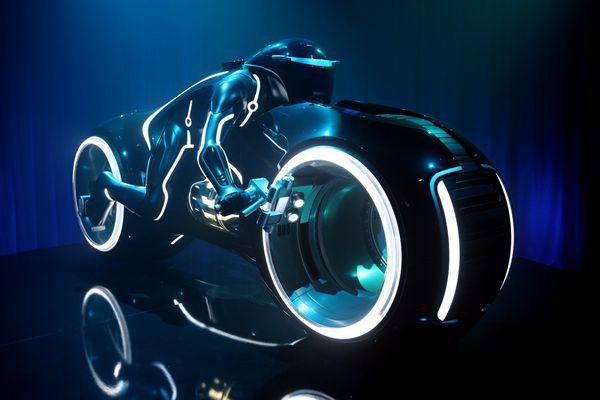
I came across this designer after seeing the film Tron, which Mead worked on extensively (the original, that is), along with other notable movies such as Blade Runner and Aliens. Mead was born in Minnesota in 1933, and has since become well known for his conceptual futuristic designs. Apart from work in sci-fi Hollywood productions, he has worked for motor companies, electronics manufacturers, and a variety of other companies in need of his unique design skills. He launched the company Syd Mead Inc. in 1970, and has been working in a plethora of design fields since. However, he is still best known for his work in conceptual and futuristic designs. Some of his most important works include:
Conceptual designs for the following films: The Island, Tron, The Jetsons, Alien, Blade Runner
Work for Ford Motor Company and PHILLIPS Electronics
Gundam Robot Design


Conceptual designs for the following films: The Island, Tron, The Jetsons, Alien, Blade Runner
Work for Ford Motor Company and PHILLIPS Electronics
Gundam Robot Design

sources:
Syd Mead's Sentury II by: Syd Mead
http://www.sydmead.com/v/10/splash/
Syd Mead's Sentury II by: Syd Mead
http://www.sydmead.com/v/10/splash/
Sunday, January 23, 2011
course reflection
The design process: while probably very important to know, I found it kind of boring and monotonous to follow. However, when exemplified through the video The Deep Dive about IDEO, it was brought to life a lot more and was a very interesting look at the processes which are used to create the objects all around us. What struck me first in the film was the diversity that the design team was made up of, including at least 6 different professions, many that I might not have even connected with design to begin with. Secondly, how quickly they were able to design and build a prototype for a new shopping cart, which seemed to make improvements on almost all aspects of a traditional cart, made me think of how many other products exist on the market today which could be markedly bettered if they were put through IDEO's process. the video gave me a much better idea of what goes into evaluating and designing both old and new objects.
reading response
In chapters 4 through 6, Heskett delves more deeply into the three major disciplines of design: product, communication, and environment. I came across a lot of topics and ideas which I've never really thought about or been exposed to, which is always a good thing. for example, designers infusion of their own egos or aspirations into products above consumer's needs, the changing philosophies regarding offices and workspaces, and how to utilize them to maximize efficiency and creativity, etc. Even though I'm usually most interested in the industrial design field, I was captured by the chapter on environments more so in this case. I guess i've always had some lingering interest in buildings and spaces because my dad is an architect, so considering all the different attempts by companies to reevaluate their work environments caught my attention. It also tied in to the video we watched in class about IDEO and they way that they operate when coming up with a new design, which is the kind of place I can only dream about working one day. Some of the material in these chapters was a little dry, but enjoyable and informative overall once again!
Wednesday, January 19, 2011
found patterns


Subscribe to:
Posts (Atom)